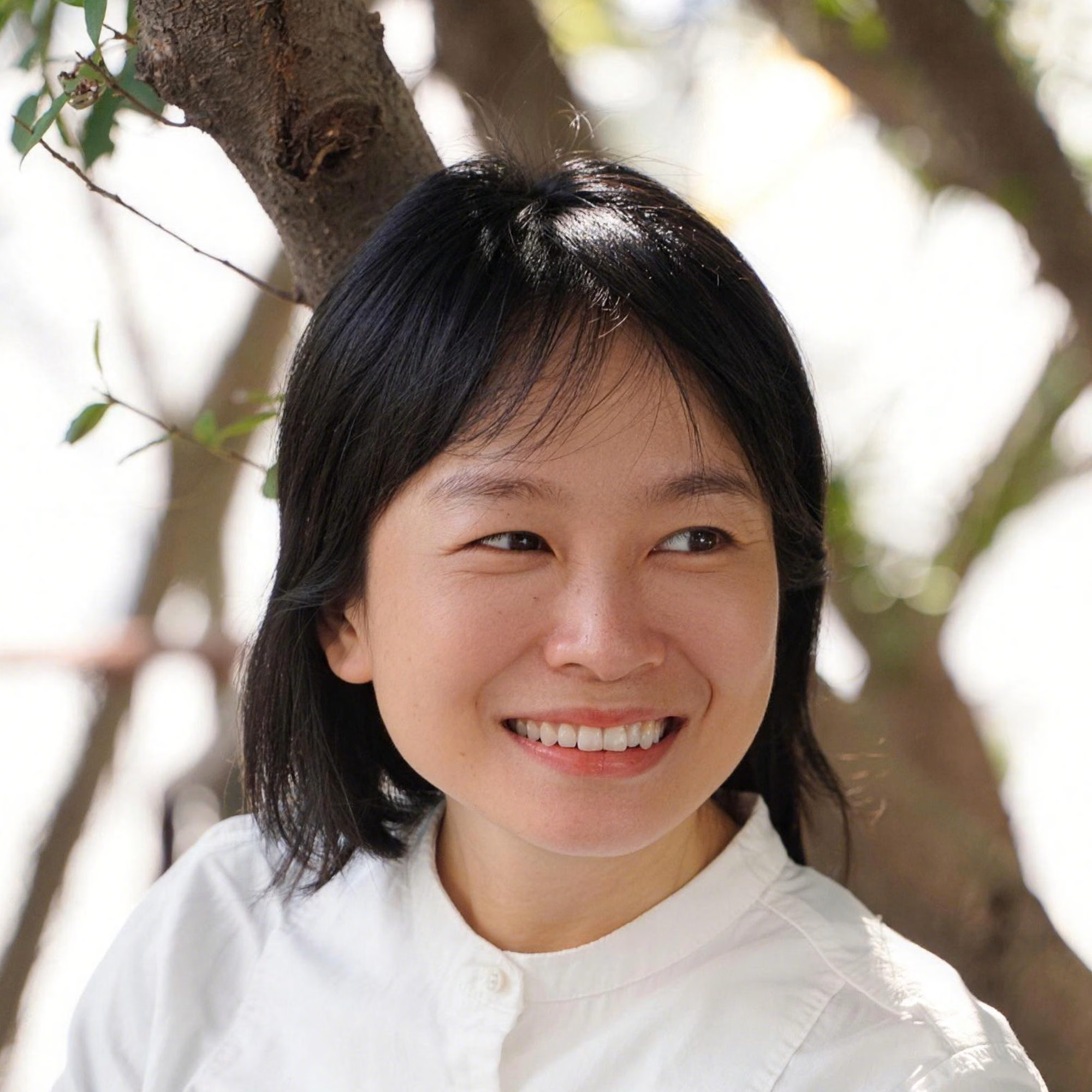
Class‑1 Registered Architect (China)
RIBA Chartered Architect
Chair Professor, the School of Architecture, South China University of Technology
Professor of Practice, the Department of Architecture, The Hong Kong Polytechnic University
Michelle founded FEI in 2006, rooted in southern China. FEI Architects serves as a spatial practice platform while FEI Arts functions as a research hub. Guided by the design philosophy of “Artecture” (art‑infused architecture), she works toward urban community building — every building, to her, is a Borderless Community.
Her notable projects cover community building, urban renewal and participatory design, including Estate Plaza, Fang Suo Commune, Si Hai Han She, comprehensive Xinghai Concert Hall renovation, Zi Ni Twelve Portals · Borderless Community, Ersha Island Man Lap Fong, and the School of Mathematical Sciences, Peking University. Zi Ni Twelve Portals – Borderless Community was featured by Yitiao, earning over 300 million views and sparking discussions on future residential design.
Her works have won Dezeen Awards Gold Award, WAN Award Gold Award, WA Award, Good Design Award and China Design Biennale Award.
Since 2016, together with artist Song Dong and Mapping Workshop founder Jason Ho, she has advanced the “Borderless” concept via FEI Arts, bringing public education into everyday urban life. Boundary‑breaking projects such as Market Museum, Public Garden and Architecture, or Architecture show new ways for architects and artists to build Borderless Communities.