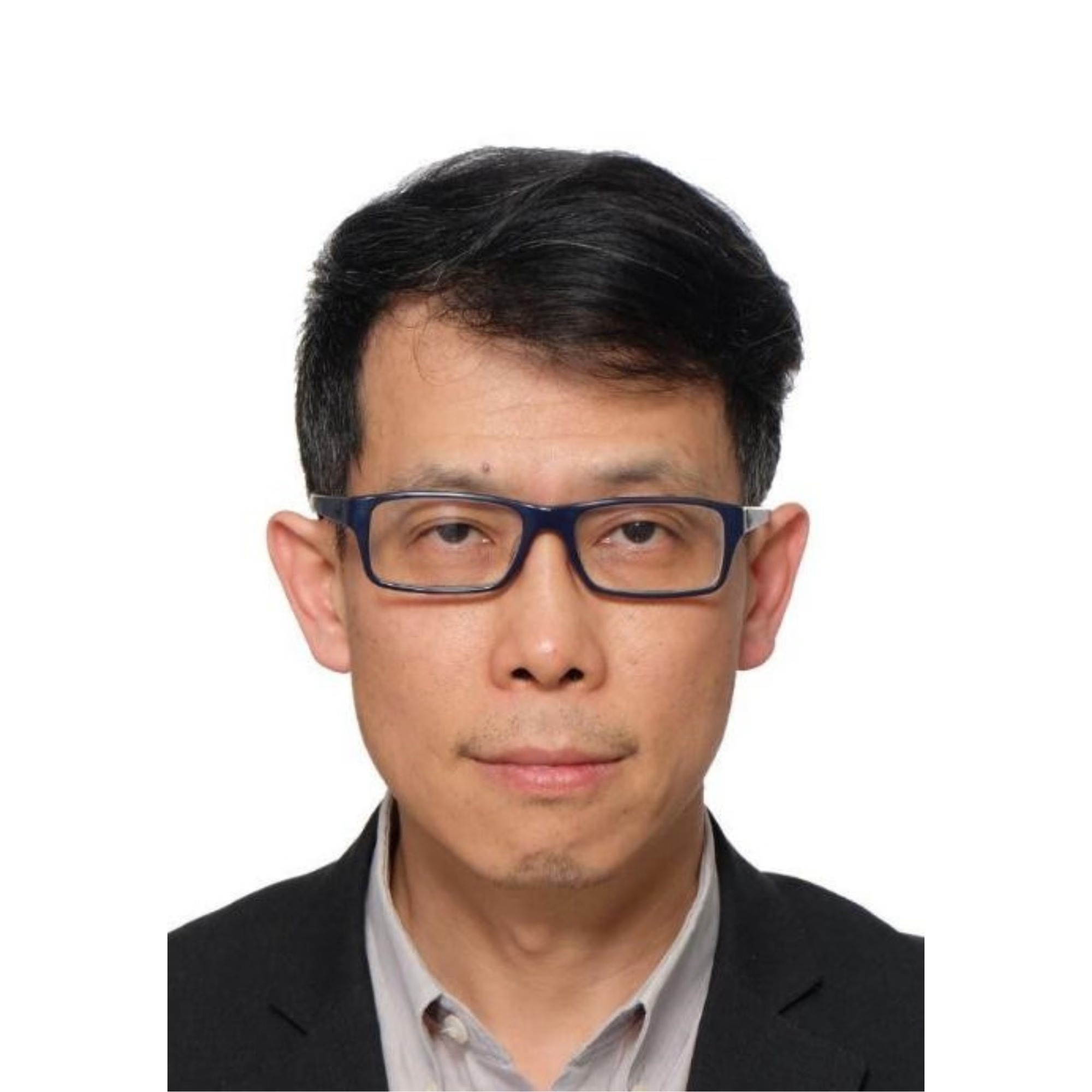
Mr. KING Kwok Cheung is Principal Manager at the Countryside Conservation Office (Environment and Ecology Bureau), overseeing branding, publicity, and public engagement for Yan Chau Tong and the Countryside Conservation Funding Scheme. He retired in 2025 as Assistant Director (Architectural Design) at the Architectural Services Department, HKSAR Government.
Over his distinguished career, Mr. KING led architectural design and management for landmark public developments, including Sai Kung Waterfront Park, PMQ Redevelopment, Tsim Sha Tsui Promenade Beautification, Peak revitalization, hospital redevelopments, and major government complexes. His projects have won top honors from the Hong Kong Institute of Architects (HKIA)—including the President’s Prize and Special Architectural Award for Heritage and Adaptive Reuse—and the Hong Kong Institute of Urban Design.
A prominent voice in heritage conservation and urban design, Mr. KING is a committee member of the Hong Kong Architecture Centre and former HKIA committee member (Heritage & Conservation; Planning & Urban Design). He regularly presents and publishes at global and regional symposia, including UIA PHG Paris, CIOB CPD seminars, and cross-strait architectural forums.